If you live in any major city, it’s likely that you’ve seen the uptick in cargo bike usage in your own neighbourhood.
Cargo bikes have taken over school drop-offs, grocery store hauls, parcel deliveries and more, but this just scratches the surface of their potential to transform urban mobility.
More than half of all urban freight journeys in Europe could be replaced with a cargo bike and Cargo Cycling, a brand of Nijland Cycling based in the Netherlands, is one player at the forefront of this transformation.
Cargo Cycling helps organisations embed cargo bikes into their operations for less traditional uses, opening up new possibilities for decarbonisation of core business activities.
“We strongly believe that the quality of B2B cargo bikes needs to significantly improve across the board in order to facilitate business cases that work in the long run,” Jeroen Beumer, Director of Marketing at Cargo Cycling, tells Zag Daily.
Cargo Cycling’s Doer model is a proof point of this ethos. Produced in partnership with Nijland Cycling and last-mile manufacturer Metrucks GmbH, the Doer aims to show what can be achieved when innovation and user-centric design marry to address the unique challenges businesses face.
From delivering medicine for the NHS and charging electric vehicles across major cities to transporting 450kg capacity trailers for freight deliveries, the Doer handles unconventional roles with ease, accumulating glowing reviews from customers leading early pilots with the bike.
Winning over drivers with comfort and reliability
For businesses to successfully integrate cargo bikes into their fleets, gaining the support of van and fleet drivers is essential.
“Drivers love the Doer and really do not want to give it back after the trial has finished. It is simple and intuitive to use,” says Beumer.
The bike has a strong and stable four-wheel base, with a high-load capacity cargo carrier attached. It features a cabin that protects drivers from the elements as well as a comfortable riding position that feels similar to a van thanks to the recumbent seat.
Delivering efficiency for the NHS
In the English city of Hull, the Doer is being used to transport goods across an NHS hospital site.
Graham Taylor, the Facilities Service Manager at the hospital, believes that the Doer isn’t just a reliable ride, it’s also one that improves staff experiences. “The Doer promotes increased physical activity for the portering staff, directly contributing to staff wellbeing. The Portering supervisors have noted that when passing patients, staff and visitors alike, the Doer always puts a smile on people’s faces.”
As part of the NHS pilot, the Doer is being used to transport a variety of different goods, from medicine and linens to medical gas.
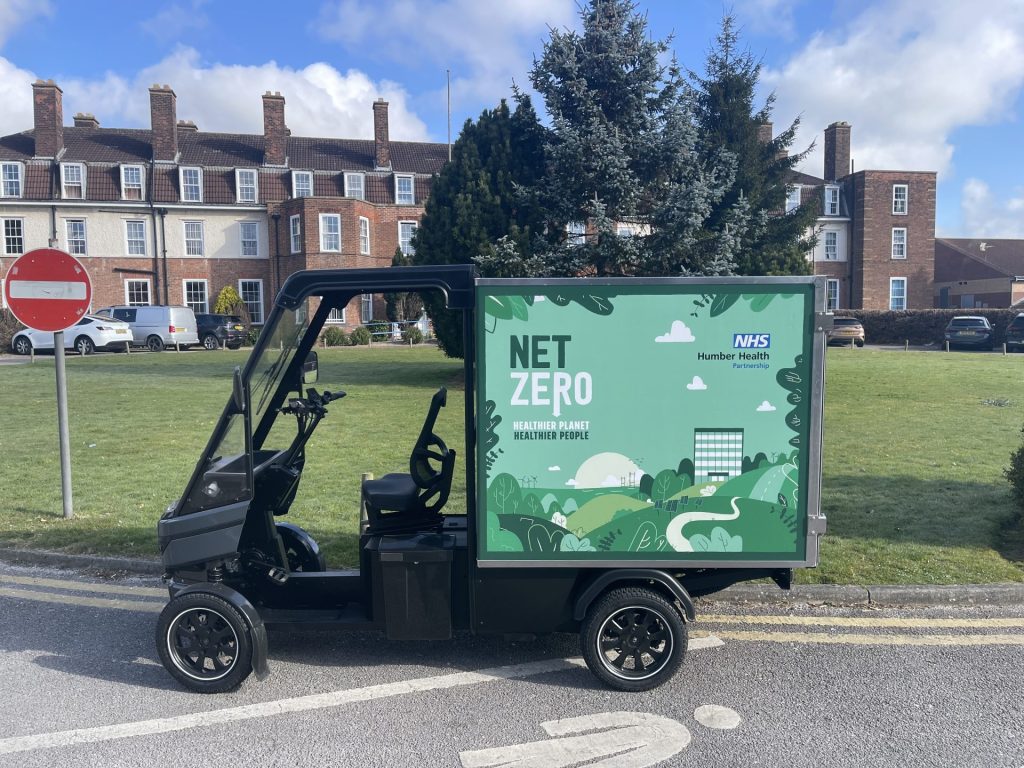
Cargo Cycling worked with the team at the NHS site to ensure the design of the vehicle would meet the unique needs of the hospital.
“The selection of the Doer e-cargo bike for the Castle Hill Hospital trial was a strategic decision rooted in its unique design and collaborative development process,” says Taylor.
Cargo Cycling co-developed the Doer cargo bike with key input from the Hull University Teaching Hospitals Portering team and the pilot is already delivering positive outcomes. “In its first full months of operation, the Doer logged over 115 km of use per month. It frees up the ambulance fleet for its core purpose of patient movement, ensuring greater availability and an overall more efficient service for patient care,” Taylor says.
Mastering reliability for Vemo Logistics
In the design of the Doer, reliability is prioritised, understanding that the robustness of the bike would lead to a lower total cost of ownership (TCO) for its customers. The bike has been designed to require minimal maintenance while carrying heavy loads reliably, a key consideration for businesses integrating cargo bikes into their operations.
In a pilot with Vemo Logistiks, the Doer was tested with an additional Zemmi trailer, enabling a total load of up to 450kg and a cargo volume of 4.2 m³. Managing this capacity in busy urban environments demonstrates how cargo bikes can meet the practical demands of city logistics.
Jonathan Kümmerle, Co-Founder of Vemo Logistiks, said that the results of a seven-month test period encouraged the firm to add Doers to its fleet in the new year. The pilot offers insight into how high-capacity cargo bikes can provide reliable, efficient alternatives to traditional fleet vehicles.
Introducing new and novel uses for UZE.Energy
The Doer does more than deliver goods from A to B. UZE.Energy is partnering with Cargo Cycling to offer its mobile charging of electric vehicles for those that don’t have access to a charging solution.
To increase access to charging infrastructure, UZE.Energy is planning to use the Doer to transport its charging unit to customers who have booked a charging session. The Doer and charging unit are parked beside the EV that needs charging, without interfering with traffic or cluttered pavement space.
Having tested and tried various solutions for its purpose, UZE.Energy CEO Kris Verdonck concludes that the Doer “holds the promise of extreme sturdiness and sufficient power” to operate the remote charging solution.
“We are very happy to start testing the Doer in close cooperation with Cargo Cycling.”
A net zero solution for sustainable cities
As use cases for the Doer continue to emerge, one point is clear: the Doer has become known as an effective and simple solution for decarbonising urban logistics.
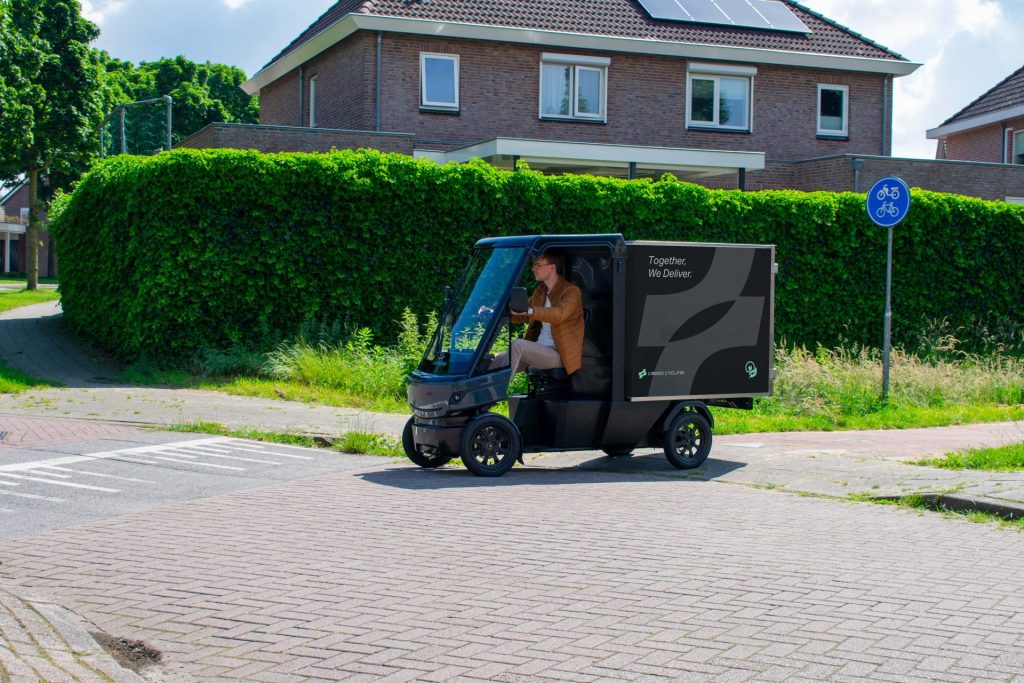
“The Doer is a clear demonstration of how innovative solutions can advance carbon Net Zero goals while simultaneously improving service efficiency, staff morale, and patient care,” Taylor from the Hull NHS site says.
It’s emerging as a key player in urban logistics, proving how cargo bikes can make city transport more efficient and reduce emissions across Europe.