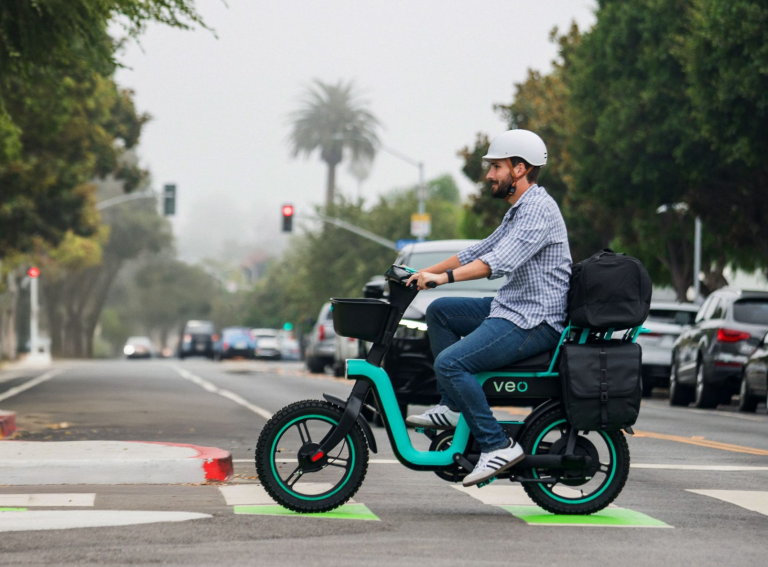
Shared micromobility operator Lime cut its total carbon emissions by a fifth in 2025, even as its business continued to grow.
Lime’s first sustainability report as a listed company covers 2025 and adds governance, workforce, safety and community data to the emissions figures it released earlier this year.
The report records 90,376 tonnes of carbon dioxide equivalent (CO₂e), a measure that converts different greenhouse gases into a single figure. That is down 20.6% from 113,756 tonnes in 2024, when emissions had risen from 97,240 tonnes in 2023. Lime listed on Nasdaq on 1 July 2026, after the reporting period.
The figures build on Lime’s 2025 Carbon Inventory Report, which Zag Daily examined earlier this year. That report showed emissions intensity, measured as the carbon produced per rider kilometre, had fallen 81.4% against its 2019 baseline, compared with 66.8% in 2024. Total emissions in 2025 were also 35% below the 2019 level of 138,844 tonnes.
Andrew Savage, Lime’s Vice President of Sustainability, told Zag Daily that lower-carbon materials sourcing and longer vehicle lifespans had driven the biggest improvements in emissions intensity.
“In 2025, our lower-carbon sourcing initiatives reduced emissions per unit across e-scooters, e-bikes and batteries by 25.3%,” Savage said.
The reduction in emissions come as Lime continues to track growth across its business, with revenue rising 29% to $886.7 million in 2025.
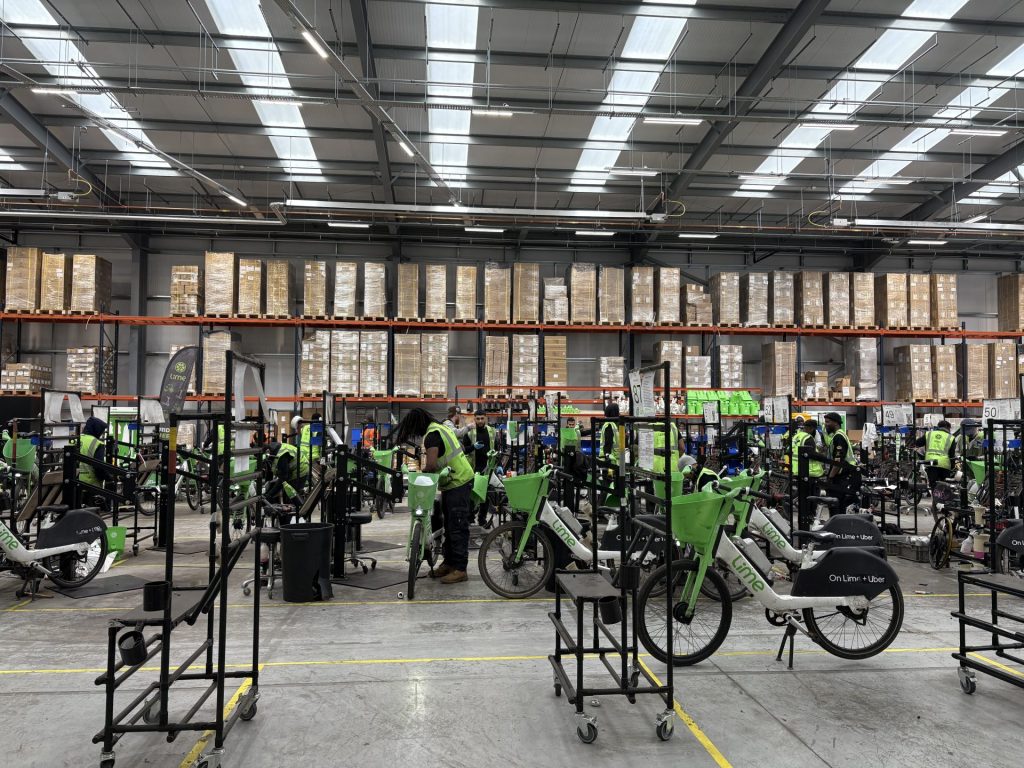
Repairs carried out in the field made up 46% of all repairs, meaning these vehicles did not need to return to warehouses. By the end of the year, the company had also moved 70% of its own operations fleet to electric vehicles and electric trikes.
Lime says renewable electricity covers its facilities and shared fleet. Of the 10,379.5 megawatt-hours it used in 2025, more than 5,175 were covered by energy attribute certificates – tradable instruments that certify the renewable attributes of electricity generation. The remaining 5,204 megawatt-hours were covered by local green power programmes.
The supply chain holds most of the footprint
Scope 3 emissions, which cover a company’s value chain and includes manufacturing, purchased materials and logistics, made up 97.5% of Lime’s 2025 footprint. Vehicles, parts and batteries accounted for 55.8% of those emissions.
The Science Based Targets initiative (SBTi), which validates corporate emissions targets against scientific pathways for limiting global warming, has validated Lime’s targets. The company aims to cut Scope 3 emissions intensity per rider kilometre by 97% by 2030, against a 2019 baseline. The report puts the reduction so far at 79.5%, which Lime says is two years ahead of its modelled pathway.
Scope 1 and 2 emissions cover direct operations, including fuel used by the company’s own vehicles and purchased electricity. Lime aims to cut these emissions by 90% in absolute terms by 2030. The report records a 77.2% reduction so far, which Lime says puts it four years ahead of its modelled pathway.
“The harder work is in Scope 3,” Savage said. “Vehicles, parts and batteries account for 55.8% of Scope 3 emissions so supplier engagement, continuing to source lower-emission materials and expanding cleaner logistics are essential to our continued progress.”

Lime is trying to reduce the manufacturing footprint of its vehicles through material choices. It sources aluminium produced using renewable energy for frames, forks and battery enclosures, which it estimates generates 59.7% fewer emissions than conventional production. It also uses battery cells made by LG with renewable energy, which Lime estimates cuts their emissions by 40% compared with traditional production. Both figures come from Lime’s own life cycle analysis.
The company estimates that 97% of its vehicle components are recyclable by weight. The report makes clear that this measures recycling potential, not the proportion actually recovered. Recovery depends on local infrastructure and available end-of-life routes.
Asked what share of retired vehicles and batteries is actually recovered, Savage said “the vast, vast majority of our vehicle components are recycled if they no longer have a useful life for repair”. The report gives no single recovery rate across its markets.
The company names several partners working on reuse and recycling. VoltR provides a second-life route for some battery cells in France, while battery recycler Redwood Materials and magnet recovery specialist Cyclic Materials work with Lime in North America. Lime also collects batteries through Call2Recycle in Canada.
Board oversight and climate risk
The report sets out who oversees Lime’s climate targets. A cross-functional Sustainability Council, led by Savage and including CEO Wayne Ting, meets quarterly to review progress.
“Our Sustainability Council has effectively driven decarbonisation efforts throughout the business, enabling us to remain ahead of our ambitious net zero target and embed efficiency efforts across the company,” Ting said in the report.
The board’s Nominating and Corporate Governance Committee oversees environmental and social matters. Climate risks are also included in Lime’s enterprise risk management programme, although the report describes the current assessment as primarily qualitative.
Lime’s challenge now is to sustain its emissions reductions as it expands, with progress increasingly dependent on making cuts from the supply chain accounting for most of its carbon footprint.