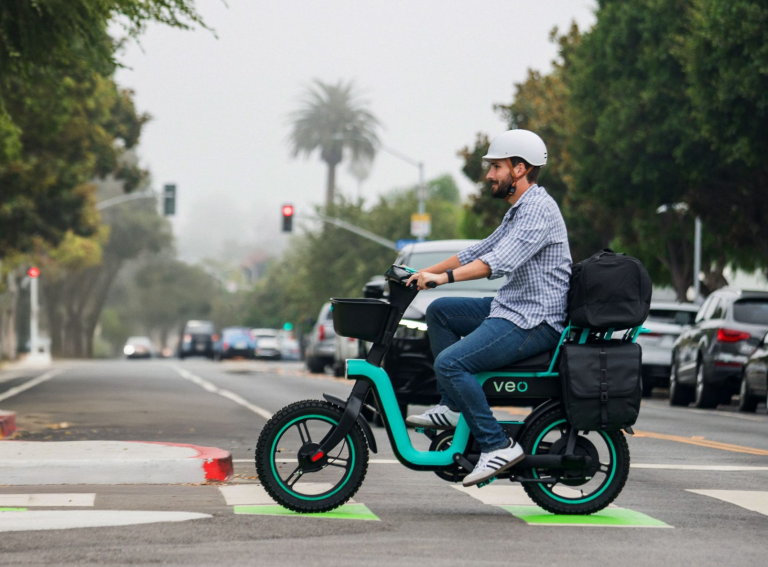
Fleet optimisation is a critical ingredient for shared micromobility operators.
Done right and the vehicles will be in the right place at the right time for when users need them most. This then boosts the operator’s bottom line and builds credibility for shared micromobility systems in the cities in which they work.
Done wrong and you will see vehicles strewn across pavements giving shared micromobility a bad reputation. Users are then less inclined to ride the vehicles and cities become less willing to invest in them.
Urban Sharing has made it its primary mission to ensure operations are done right. With that, it has just released two new iterations of its on-street operations platform in just six months.
Urban Crew 2.1
Urban Sharing launched Urban Crew Version 2.0 last September.
The platform has a range of capabilities designed to optimise operations for shared micromobility teams, whether this means fleet rebalancing, battery swapping, or issuing maintenance tasks. It does so by using smart algorithms to automate tasks and suggest the best possible operational solutions based on historical and real-time data.
Since its inception, Urban Crew has racked up close to 50,000 micromobility assets, such as vehicles and charging stations.
Following the launch of Version 2.0, Urban Sharing has gone live with a new iteration – Urban Crew V2.1.
“The whole premise of Urban Crew is to create one application for everything,” Urban Sharing’s Chief Revenue Officer Tom Nutley tells Zag Daily. “Before, operators had a rebalancing app, they had a sheet for maintenance, a sheet for battery levels, a WhatsApp or a slack channel. What we’re doing is centralising operations and making sure everything is tracked and has a history.”
One of the most significant upgrades with Urban Crew 2.1 is its unique incorporation of service-level agreements (SLAs).
SLAs are contractual obligations that shared operators are required to uphold as they serve the tender season.
Urban Crew’s previous version incorporated SLAs into assets such as vehicles and stations. For example, if an SLA for a shared operator is to keep bike stations with at least 20% capacity then Urban Crew would prioritise tasks which ensure the operator always complies with this.
Version 2.1 takes it one step further by adding SLA compliance into areas as well as assets.
Tom says the update is to match shared micromobility systems that mostly work on an area basis – for instance with clusters, sub-clusters and crowns. By adding SLA compliance to areas as well as to overall assets, Urban Crew aims to provide more granular data for operators to achieve their desired outcomes in specific regions.
Additionally, whereas software platforms usually accommodate traditional SLAs like those focused on fleet rebalancing, Version 2.1 now enables operators to incorporate their battery and maintenance targets for processing and prioritisation.
The new update also comes with a fresh analytics page that shows managers how field teams are performing both in real-time and historically, as a group or as an individual.
“This data offers the granularity that operators can sometimes miss,” Tom says. “Rather than tracking battery swaps for instance, we can track the change in battery charge. If someone in the field team changes a battery from 10% to 100%, then this would get a score of +90. It means more than swapping a battery from 20% to 30%.”
Teams can also use the updated platform to communicate with one another. Rather than relying on a separate messaging app for fleet updates, Version 2.1 allows employees to add comments to assets which are communicated to the team via push notifications. For instance, say a team member sees a damaged bike, they can leave a comment on this asset that all other members can see – providing a digital and visible history of each asset.
Urban Crew 2.2
With a rich lineup of features, Version 2.2 of Urban Crew includes all the same capabilities as Version 2.1 plus more.
Notably, Version 2.2 brings with it the ability for shared micromobility operators to personalise their own dashboard.
Whereas the previous Urban Crew dashboard indicated standard information such as an operator’s top 10 performing stations, Version 2.2 lets operators build their own dashboard with their desired inputs and outputs. Operators can decide the size of the dashboard, the use of graphs, charts and tables and the layout that best suits them – and each employee of the team can personalise their own dashboard.
“If you’re an Operations Manager that’s running Zone 1 in London for example, you can focus all of your dashboard on only that area and action your priorities from there. If you’re a General Manager and want oversight of the whole system, you can create a dashboard that gives you visibility of the whole system. If you only want to monitor compliance with SLAs, you can personalise your dashboard to show only SLAs.”
Team members aren’t confined to one dashboard either. Using a playlist feature, they can swap between dashboards depending on their focus – whether it’s vehicle uptake or SLA compliance.
Speaking of SLAs, Version 2.2 also has an ‘over 100% compliance’ feature. For instance, a station at full capacity of vehicles would mean the operator has complied with its SLA by 100%. However, if the station has an overflow area also stocked with vehicles, this means the operator is complying with its SLA by more than 100%.
The importance of SLAs can be ranked and prioritised if more than one applies, and Urban Crew can indicate which one is more important for the team at that moment in time.
“The coolest thing is the SLA analytics,” Tom says. “Now we can offer an analytics heatmap showing the real-time and historical compliance of stations and areas. That enables us to see how the system performed before and after Crew was implemented, as well as the impact of prioritising different areas.”
Operators can then assess how they’re performing in real time and gain a better understanding of what and where they need to prioritise to become more operationally efficient.
“It also allows us to assess how competitors are performing against the SLAs before we go in with the new system.”
A teaser for the road ahead
Version 2.2 is currently being tested internally with its full launch scheduled for the end of March.
Tom tells Zag Daily that users can expect a complete algorithm redesign.
Within that redesign, Urban Crew Version 2.2 will combine every single parameter and data point that matters to the system with the actions the operator is taking. Whereas the platform previously calculated an optimal solution for every asset individually, Version 2.2 will holistically use these parameters to give the optimal solution for operational teams in that moment of time.
That optimal solution factors in rebalancing, maintenance, battery swapping and custom tasks and the order these priority areas should be completed in.
“If we’re touching an asset or a location, we want to be as efficient as possible. Rather than moving three bikes to Station A, then coming back to Station A to fix Bike 1, and then swapping two batteries at Station A, we create a list of all the optimal things to do on a route from point A to point B.
“Basically, we’re combining all the elements into one rather than treating each asset as an individual system.”
As part of the algorithm design, Urban Sharing is also looking for Version 2.2 to give explanations to operators for why each task has been made a priority, to give teams a deeper understanding of their system.
Why this matters
Tom says that this platform matters because these features are what operators have told Urban Sharing they need.
“You can understand what the customer wants and not do anything about it which is generically what most people are doing in the industry.
“Or you can assume what customers want based on what you think is best, but in reality it’s not what the customer wants.”
From closely monitoring and listening to customer feedback, what Urban Sharing learned the industry wants is a focus on the dispatch side and analytical granularization – two areas that Urban Crew Version 2.2 has set out to target.
Within that focus is an emphasis placed on a sleek app design and a seamless experience for operational teams. Ultimately, Tom believes it’s the app design that will get the buy in, trust, and credibility amongst field teams.
“It doesn’t matter how much we sell Crew to the team at the top who sign the cheques. If the team on the street doesn’t use it or doesn’t use it properly, then it will fail.”
Taking a step back, these features aim to give a better shared micromobility experience for three main stakeholders: the operator, user, and the city.
Tom says if operators have the tools they need to be doing their job as best as they can, then users will have well-functioning vehicles available to them when needed. This promotes a positive reputation amongst users and the city, increasing ridership and facilitating a modal shift to sustainable modes of transport.
“You can’t achieve this result if operational teams aren’t doing a good job. That’s the key takeaway.
“If the operator isn’t doing what it’s supposed to be doing, the user gets a bad experience, they use micromobility less which means less sustainable transport and more people using cars. The operator is the critical factor here to make the system work for all stakeholders.”