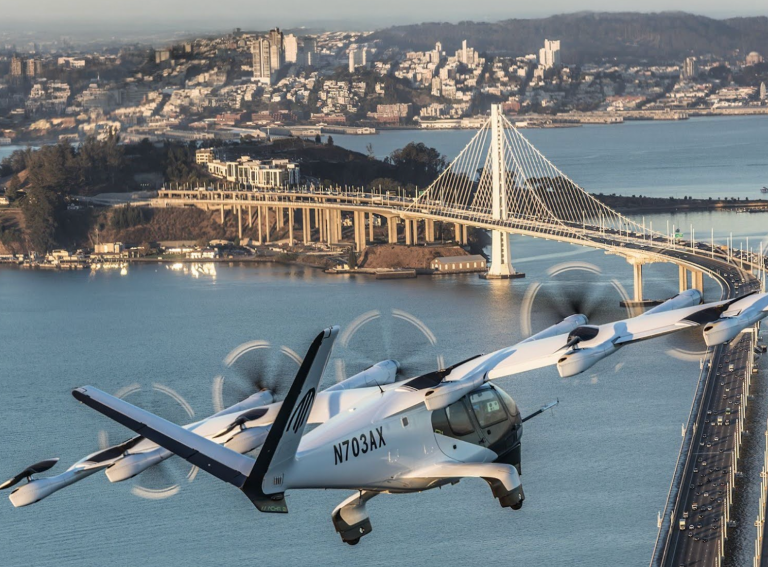
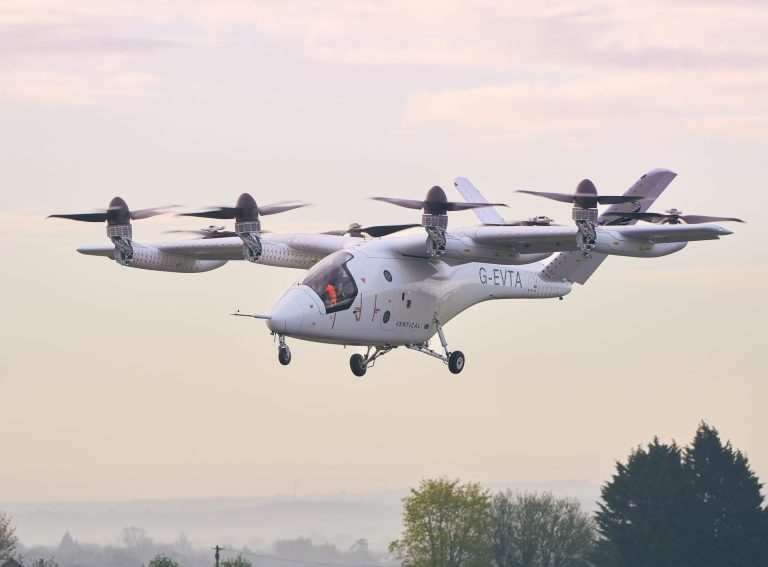
Vermont-based Beta Technologies has secured US regulatory approval to conduct demonstration flights with prospective customers aboard its electric vertical take-off and landing (eVTOL) aircraft.
The Federal Aviation Administration (FAA) has granted Beta a Special Airworthiness Certificate for market surveys for its Alia A250, making it the first eVTOL aircraft to receive this type of authorisation in the US. The approval allows the company to conduct flights with operators and other stakeholders as it works towards full type certification and commercial operations.
The A250 completed its first flight under the new authorisation on 20 October, travelling 34 nautical miles from Plattsburgh International Airport in New York to Patrick Leahy Burlington International Airport in Vermont in 20 minutes. The aircraft took off vertically, transitioned to wing-borne flight and landed vertically at its destination.
“Operators can now experience the VTOL firsthand and begin planning how it fits into their businesses, from connecting communities to moving people and goods at a lower cost,” said Kyle Clark, Beta’s Founder and Chief Executive Officer.
The approval follows a similar authorisation for Beta’s conventional take-off and landing (CTOL) aircraft, the ALIA CX300. The two aircraft share propulsion systems, flight control computers, batteries and charging technology. Beta says its CTOL and VTOL aircraft have flown more than 250,000 nautical miles combined.
The A250 also has dual pilot controls, allowing pilots from prospective customer organisations to gain hands-on experience of the aircraft. This could help operators assess its suitability for particular missions and prepare for the training requirements associated with introducing a new aircraft type.
The aircraft is designed to carry up to five passengers or more than 1,200 pounds of cargo. Beta is targeting applications including medical transport, logistics, defence and passenger services, with vertical take-off and landing allowing it to operate from locations without conventional runways.
The new certificate also expands the geographical scope of Beta’s permitted flight operations, although demonstrations remain subject to FAA limitations.
US Transportation Secretary Sean Duffy described the authorisation as a critical step towards enabling the next generation of aircraft. FAA Administrator Bryan Bedford said the agency was committed to integrating new aircraft into US airspace while maintaining existing safety standards.
The approval does not amount to full type certification or permission to begin unrestricted commercial services. Beta must continue through the regulatory process before the A250 can enter commercial operation.
For the wider eVTOL sector, the authorisation gives Beta an opportunity to engage potential customers directly while other developers continue working towards certification. Demonstrating that an aircraft can fly is one part of that process. Operators must also establish how it could fit into their businesses, from pilot training and operational planning to the economics of individual routes.