Lime’s new carbon impact report reveals sharp emissions cuts despite rapid growth; offering a credible roadmap for shared mobility, but also a reality check on where progress stalls.
In a mobility industry often split between growth and greenwashing, Lime’s latest Carbon Inventory Report makes a rare conclusion: that it’s possible to expand rapidly and cut emissions even faster.
The world’s largest shared micromobility company has reduced its company-wide carbon emissions intensity by 66.8% since 2019. That means it is generating far fewer emissions per kilometre travelled, even while posting $686 million in revenue last year, a 32% increase on 2023.
The report isn’t just a list of green wins. It lays bare the complexities of corporate climate action: where one company’s control ends and where cities, suppliers, and logistics networks must step in.
Lime’s carbon report, verified by sustainability software firm Optera, is part of its commitment to the Science Based Targets initiative. This means its numbers are independently developed and reflect a full scope of emissions: Scope 1 (direct operations), Scope 2 (electricity), and Scope 3 (supply chain, freight, business travel, and beyond).
As of 2024, Lime has cut its Scope 1 and 2 emissions by 70%, placing it four years ahead of its 2030 net-zero goal. Its emissions intensity, measured in grams of CO₂e per kilometre travelled, has dropped by two-thirds since 2019. The company says this metric keeps it honest about the trade-off between scale and sustainability.
“This report is further evidence that sustainability goes hand-in-hand with innovation and long-term growth, and how they are intrinsically linked,” Andrew Savage, Lime’s Vice President of Sustainability, tells Zag Daily. “It helps us ensure we’re providing more of a service with less overall carbon.”

Durability, not disposability
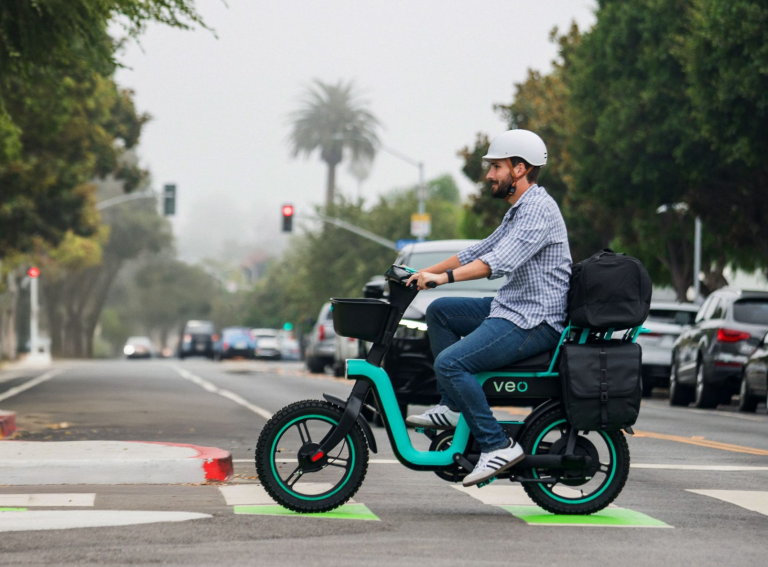
Much of Lime’s carbon progress starts with its vehicles. Built in-house for longevity, modularity, and repairability, they reflect a circular design ethos at scale.
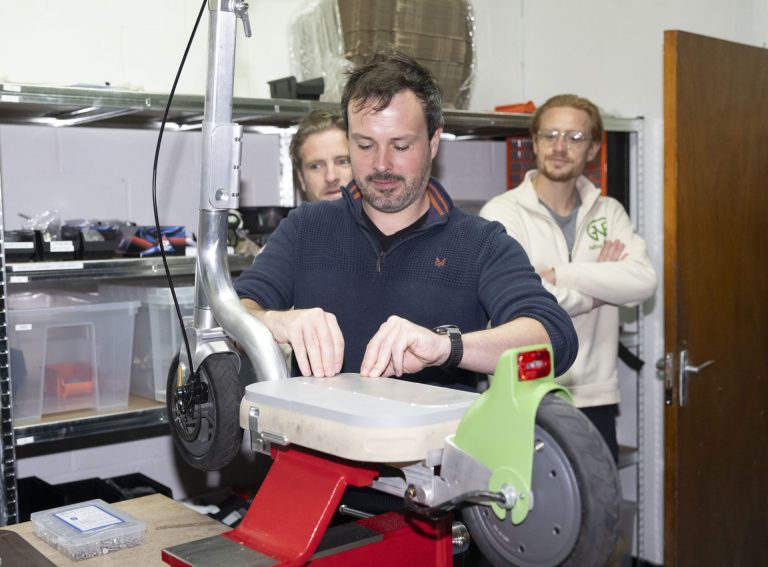
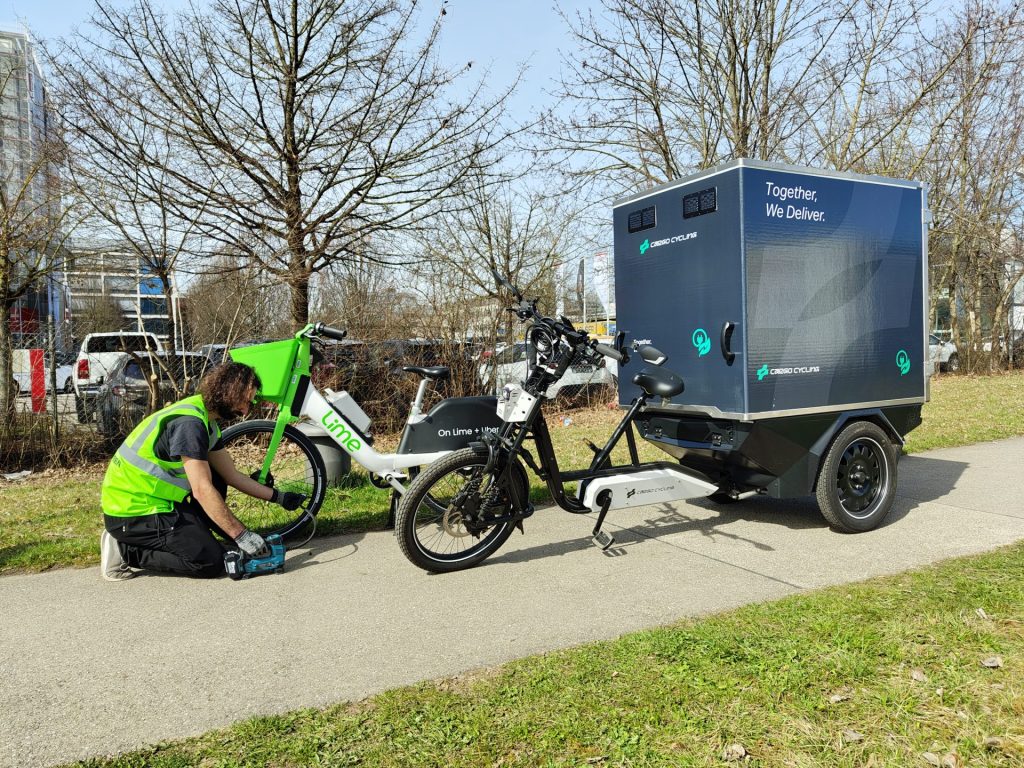
Beyond the vehicles themselves, Lime’s warehouses are set up to prioritise reuse and refurbishment, not replacement. Field technicians repair bikes and scooters on-site, avoiding carbon-heavy return logistics. These practices have driven a 37.7% drop in emissions from spare parts in just one year.
“We design our vehicles and parts in-house for durability, repair, and reuse from the outset,” says Andrew. “And we actively pursue second-life and circular solutions for components.”
Lime’s biggest challenge remains Scope 3 emissions—those tied to manufacturing, materials, logistics, and supply partners.
The company has focused on rethinking materials, moving towards low-carbon aluminium and battery components and launching new partnerships to close the loop. In 2024, Lime joined forces with Redwood Materials, a US-based lithium-ion battery recycler, and Cyclic Materials, a Canadian firm specialising in rare-earth magnet recovery.
Through Redwood, Lime now recycles batteries from vehicles in the US, Germany, and the Netherlands, reintroducing critical minerals into domestic supply chains. Cyclic helps recover magnets from retired motors in Canada and the US, reducing dependence on newly mined materials.
“These partnerships provide exciting opportunities to harvest critical materials and return them back into the electric mobility supply chain,” says Andrew.
Even so, the company acknowledges that Scope 3 emissions are the hardest to cut. Manufacturing emissions remain stubborn, and progress depends on suppliers operating in carbon-intensive regions where low-emission materials aren’t always readily available.
The freight challenge
Transporting parts and vehicles around the world is another emissions hotspot. Here, Lime has made meaningful progress: a 20.3% drop in freight-related emissions, even while shipping volumes increased.
Key to that progress is a shift away from air freight and towards cleaner modes. In North America, Lime now uses electric trucks for all port-to-hub movements, and in Europe it has rolled out HVO100-fuelled trucks powered by hydrotreated vegetable oil.
Andrew stresses that micromobility operators can’t go at it alone when it comes to freight: “Companies like us need to show there is demand to enable investments by the logistics industry.”
Lime has also committed to powering all fleet charging and facilities with 100% renewable electricity, which is done through direct procurement to avoid offsets or certificates of dubious origin.
“Our 100% renewable energy comes entirely from local energy providers or verified renewable sources,” says Andrew. That includes the company’s shared vehicle charging offices, and vehicle warehouses.
This choice sets Lime apart from others that rely on market-based accounting. It also contributed to the more than 70% cut in Scope 1 and 2 emissions, now exceeding even its own net-zero pathway.

Policy as enabler
For all the technical and operational wins, Andrew is clear that policy is crucial to Lime’s decarbonisation goals.
Lime actively lobbies for micromobility infrastructure, cohesive regulation, and incentives for low-carbon operations in the cities it serves. From enabling the use of electric cargo bikes to reduce port fees for sustainable shipping, governments have significant power to accelerate, or stall, climate progress.
“We’re constantly in communication with local governments to advocate for environments that enable sustainable transport options,” says Andrew. He adds that Lime embeds sustainability thinking across the company: “We look at it as a driver of both value and efficiency and that’s something we try to reinforce across the business.”
Lime’s 2024 Carbon Inventory Report doesn’t read as a victory lap. It presents a clear-eyed assessment of what decarbonisation looks like: from the easy wins like electricity sourcing to the hard slogs like supply chain emissions. It also invites comparisons across the sector.
“We are on a mission to help build a future where transportation is shared, affordable and carbon-free,” Andrew concludes. “But we also know, even as we celebrate progress, we know we have more work to do and can’t do it alone.”