As shared mobility matures, operators are facing a defining strategic question: what should they actually own?
Should operators build vertically integrated businesses with proprietary hardware, software and operations? Should they outsource to specialist partners and focus only on what differentiates them? Or is the future somewhere in between?
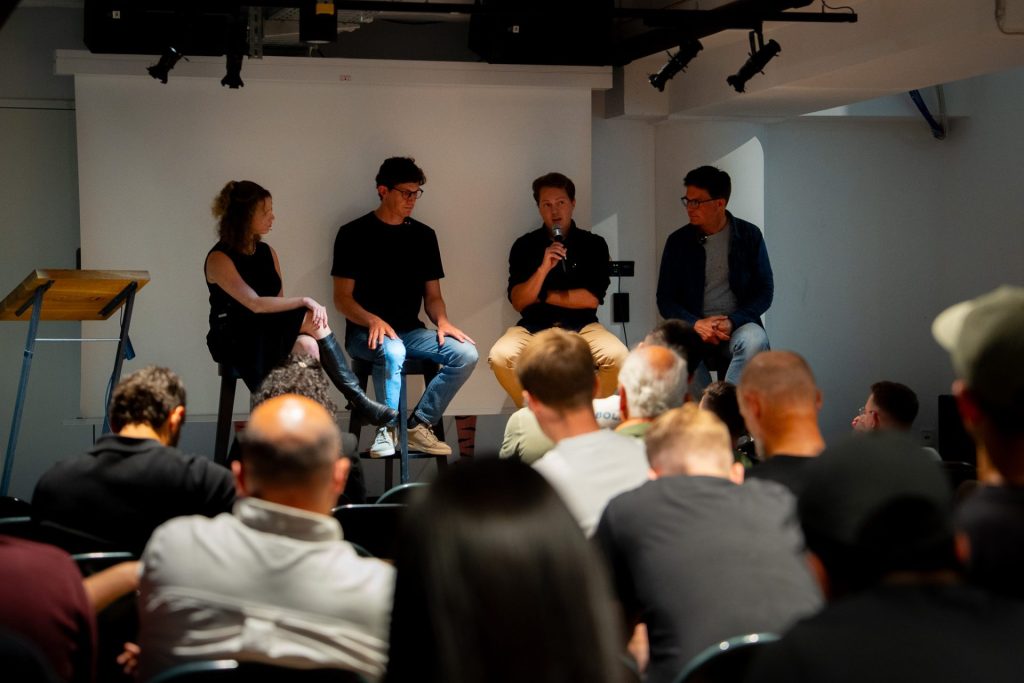
At Urban Sharing and Zag Daily’s exclusive Build vs Buy debate which took place last night in Berlin, three operators took to the stage to defend what they think is the answer.
Representing a more vertically integrated approach was Forest COO Will Jansen. Forest has built much of its business around vertical integration, developing its own backend technology and adtech ecosystem while bringing hardware partnerships closer into the business. Its recent £27 million raise brought Forest’s e-bike supplier Okai in as a minority stakeholder.
Arguing for a best-in-class partner ecosystem was Christoffer Bakken Åkre, Senior Urban Planner at Bauer Media Outdoor. Bauer Media Outdoor operates public bike share systems as part of a broader infrastructure and advertising ecosystem, increasingly working with external digital platform providers while focusing internally on planning, procurement and public infrastructure delivery.
Sitting between the two was Cooltra Founder and CEO Timo Buetefisch, whose company claims to selectively own certain capabilities while outsourcing others.
There is no universal answer but hybrid thinking is winning
While the debate was framed around competing models, the strongest consensus of the evening was that most successful operators are already moving towards some form of hybrid strategy.
Cooltra’s Timo Buetefisch argued that ownership decisions should depend on scale, geography and business segment. The company develops software and vehicle components internally where it believes they create a competitive advantage while relying on specialist suppliers elsewhere.
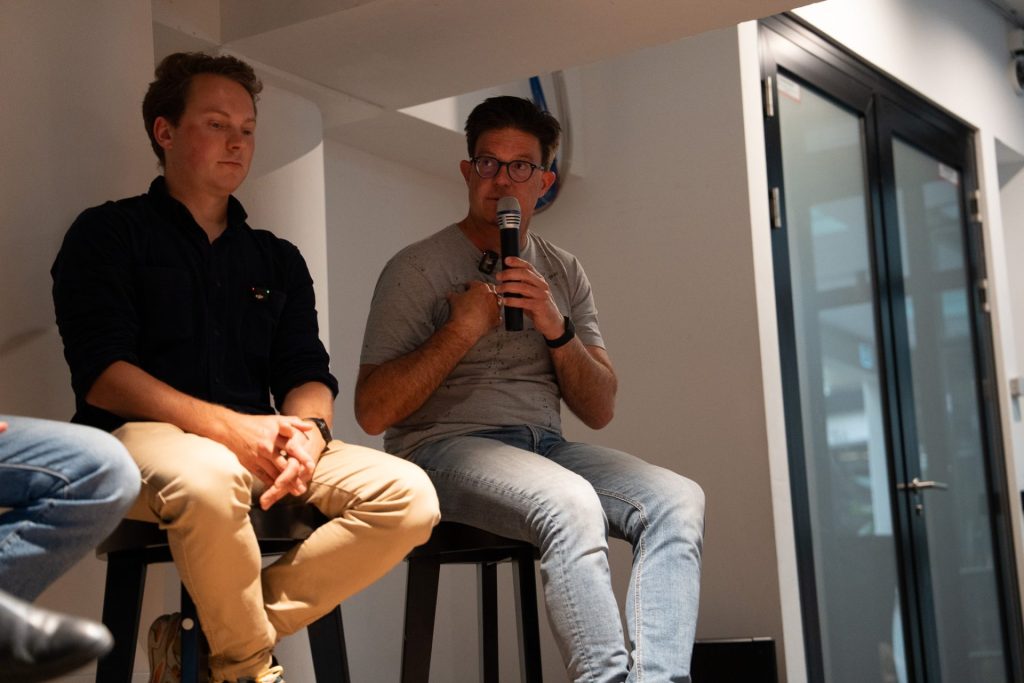
“For us, we develop everything around customer retention, loyalty, bonus systems and dynamic pricing in-house because we think that’s where innovation matters,” he said. “But for things like KYC [know your customer] software, it was clear we didn’t want to develop that ourselves.”
Jansen also acknowledged that complete vertical integration is rarely realistic, particularly when entering new markets.
“If you need to scale quickly into new countries and cities, there will always be requirements you haven’t built for yet,” he said. “Hybrid is probably the winner in that respect.”
Bakken Åkre from Bauer Media Outdoor, which largely relies on external suppliers, emphasised that success comes from carefully selecting which partners to work with rather than outsourcing indiscriminately.
The advantages of owning customer-facing technology
Where Jansen was most forceful was on the value of controlling technology that directly affects the rider experience.
Forest has developed its own customer-facing app and operational tools, allowing the company to introduce features such as gamification, parking incentives and advertising partnerships.
“There are key areas where it’s really important to retain control, particularly where the customer feels the impact,” he said.

According to Jansen, relying on third-party platforms can create limitations because providers are often building systems designed to serve multiple mobility sectors simultaneously.
“When you bring it in-house, you can combine experience across the business and solve very specific problems much faster,” he said.
The ability to quickly respond to city requests was another benefit highlighted by Jansen. He pointed to London boroughs’ demands for customised live data-sharing, arguing that internally developed systems allowed Forest to respond more rapidly than operators relying entirely on off-the-shelf platforms.
Cities care more about outcomes than operating philosophy
One point of agreement across the panel was that cities are generally less interested in whether operators build or buy and more concerned with the quality of service being delivered.
“Cities mostly care about the service being stable and being safe,” said Jansen. “I’m not sure they’re necessarily too bothered by what model you’re using.”
Åkre agreed, arguing that municipalities are primarily looking for reliable infrastructure partners capable of delivering and maintaining public services.
“I don’t think they’re really too interested in the technical details of exactly what kind of solution you’re bringing,” he said.
Instead, cities increasingly focus on responsiveness, operational performance, safety standards and long-term sustainability.
The discussion also highlighted a growing sophistication among public authorities. Buetefisch noted that many cities now view micromobility less as a disruptive private service and more as a transport mode that sits alongside buses and metro systems.
“I think city councils have understood that micromobility is really a public transport category,” he said. “I see a real shift there.”
Diversification as the defence against market downturns
Asked which business models were most vulnerable during market downturns, panellists pointed to the importance of spreading risk across multiple revenue streams, customer segments and operational models.
For Bauer Media Outdoor, that means viewing bike sharing as part of a broader infrastructure business rather than a standalone mobility service. Alongside bike share operations, the company generates revenue through advertising contracts and other public infrastructure projects.
“We see bike sharing not only as bike sharing,” said Åkre. “We see it as public infrastructure.”
Cooltra highlighted the advantages of operating across consumer sharing, fleet management and public bike share contracts. Buetefisch said that mix helped insulate the business during the pandemic, when consumer ridership collapsed but demand for delivery services surged.
“When Covid hit, our free-floating business was totally down but delivery and e-commerce went up a lot,” he said.
Forest, meanwhile, argued that resilience can also come from carefully choosing what not to own. Jansen said the company outsources much of its operational workforce through dedicated vendor partners, allowing it to scale staffing levels more easily during London’s seasonal peaks and troughs.
“If you’ve got everything in-house, you’re loading yourself up with fixed costs that you can’t easily scale down with demand,” he said.
Hybrid takes the prize
While the panel was designed as a debate between three competing approaches, the final verdict suggested the industry may already be converging towards a middle ground.
Following the discussion, both judges backed the hybrid model as the most compelling approach. Max Schalow, Founder of VC firm FounderFuel argued that while some major operators have successfully developed proprietary technology and vehicles, most companies are better served combining proven third-party products with targeted in-house expertise. Micromobility Advisor at the City of Oslo Jonas Johannessen emphasised that municipalities ultimately care less about ownership structures and more about whether operators can deliver reliable, sustainable services.
In an audience vote, event attendees overwhelmingly backed the hybrid approach. While the topic is certainly larger than a 30-minute panel discussion, one clear takeaway from the event is that shared micromobility operators are actively grappling with the build-or-buy decision.