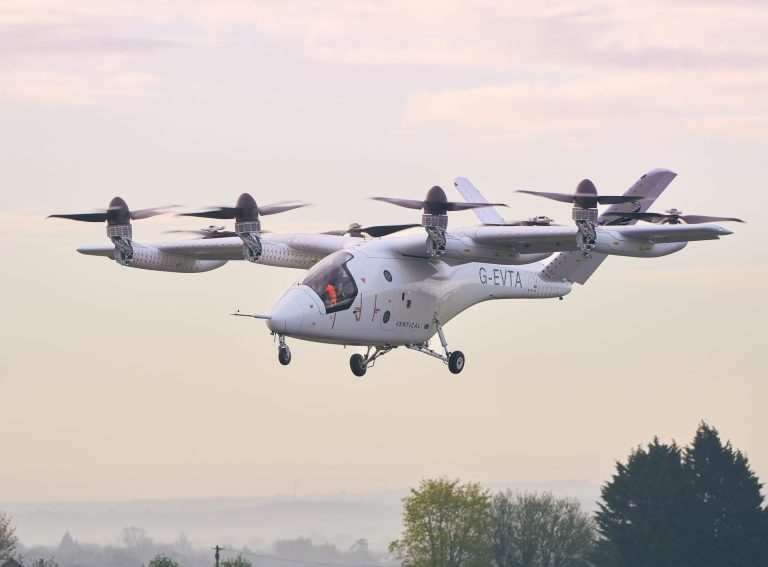
Indian electric aircraft developer Sarla Aviation has completed the flight test campaign for its first eVTOL technology demonstrator, allowing the company to move on to testing controlled transition between vertical and wing-borne flight.
Founded in 2023 by former Lilium engineers Rakesh Gaonkar and Adrian Schmidt, Sarla is developing a six-seat electric air taxi for regional and urban transport in India. The company remains in the technology demonstration phase, with its half-scale Sylla aircraft designed to validate key systems before work progresses towards a certifiable aircraft.
Sarla says the data gathered during its latest flight campaign will now underpin the development of a second demonstrator capable of transitioning from vertical flight to wing-borne flight.
“Sylla 1.0 was never built simply to hover. It was built to answer engineering questions that simulations alone cannot,” said Gaonkar, adding that the aircraft had provided the data the company “set out to capture”, with those learnings already shaping Sarla’s next-generation demonstrator.
Over six months of testing, the half-scale aircraft completed more than 500 tests and accumulated over 18 hours of flight time.
The programme was designed to validate how the aircraft’s electric propulsion system, battery architecture, distributed propulsion, flight control algorithms, airframe and landing gear perform together as an integrated system under real operating conditions.
Sarla said the programme also established several firsts for India’s electric aviation sector, including the country’s first 700kg-class electric aircraft capable of vertical take-off, the first 400-volt electric powertrain architecture, the first distributed-propulsion wing system and the first full-stack ground testing programme conducted in accordance with airworthiness regulations.
With the initial campaign complete, the company has begun developing Sylla 2.0. While the first demonstrator focused on integrated systems validation and controlled hover, its successor will target controlled transition between vertical and wing-borne flight, a key step towards a certifiable passenger eVTOL.
The company said Sylla 1.0 progressed from design to first flight in under 12 months. Sarla also said the programme was developed for less than $13 million, with the company backed by investors including IndiGo Ventures, Accel and Nikhil Kamath.