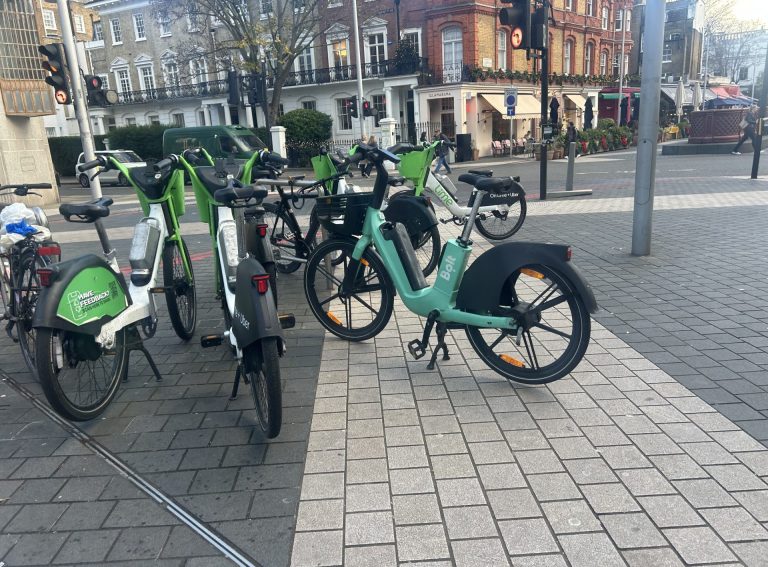
Injury rates for shared e-scooters and e-bikes in Europe fell again in 2025, according to new data from Micro-Mobility for Europe (MMfE).
MMfE is an industry coalition representing shared micromobility operators Bolt, Dott, Lime and Voi. The figures, drawn from nearly 500 million trips, extend a trend Zag Daily has tracked since injuries fell for the third year in a row in 2023 and again for a fourth consecutive year in 2024.
Shared e-bike usage saw the strongest results, with the number of trips rising 72.3% and kilometres travelled up 49% year-on-year. Despite that rapid expansion, injuries per million trips fell by 18.4% compared to 2024.
MMfE’s Co-Chair Marc Naether told Zag Daily that a combination of factors explain the improvement.
“Better infrastructure in many cities, growing rider familiarity and a strong ‘safety in numbers’ effect as more people use these vehicles,” Naether said. “At the same time, shared operators have continued to invest in vehicle quality, maintenance and user education. Together, these elements create a safer operating environment as the mode matures.”
For shared e-scooters, kilometres travelled rose 13.9% while injuries per million kilometres dropped by 1.1%. Serious injury risk per million kilometres also fell by 0.6%. Over the longer term, injury risk per million kilometres for shared e-scooters has fallen by 19.9% since 2021.
The 2025 data covers more than 353 million shared e-scooter trips across over 640 million kilometres, and more than 136 million shared e-bike rides covering over 354 million kilometres. The geographic scope includes the EU27, Israel, Norway, Switzerland and the UK.
Naether added that the data demonstrated that “growth and safety can go hand in hand,” pointing to a 24% reduction in shared e-scooter injury risk per million trips since 2021. The coalition is also working with Professor George Yannis of the National Technical University of Athens on a more detailed analysis of micromobility safety trends to inform future policymaking.
Despite the positive trajectory, MMfE notes that reductions in serious injuries and fatalities are not occurring quickly enough to meet European Commission targets under its Vision Zero initiative, which aims to bring road deaths and serious injuries as close to zero as possible by 2050. Vulnerable road users remain among the most affected in urban traffic.
The coalition is calling for stronger investment in dedicated infrastructure for vulnerable road users and lower speed limits for motorised vehicles in urban areas, arguing that broader road safety improvements are needed alongside the progress being made within the micromobility sector itself.