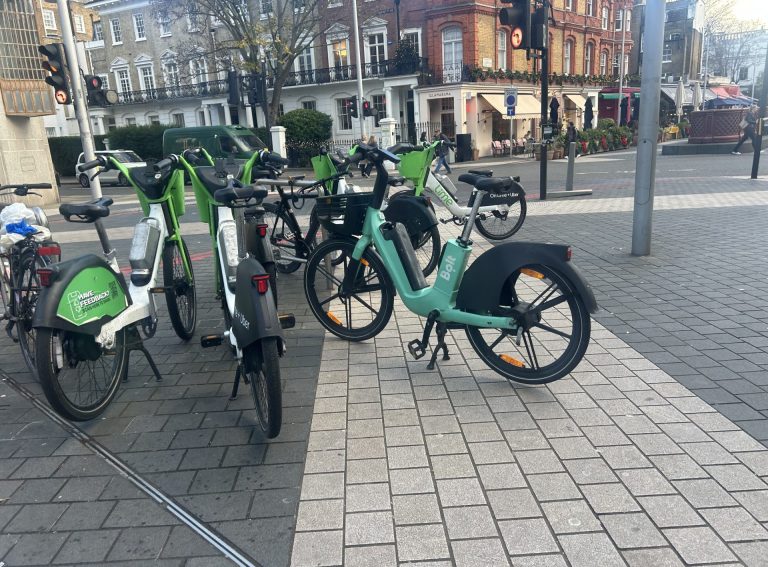
US shared micromobility giant Lime has surpassed $1 billion in trailing 12-month revenue for the first time in its history.
According to Lime’s Q3 2026 financial results, the operator saw revenue increase to $361 million, marking a 20% year-on-year rise.
Net income grew at a faster rate, with a 41% year-on-year increase to $44 million and representing a net profit margin of just over 12%. In Q3 2025, Lime’s net profit margin was 10.3%.
During Lime’s official Q3 2026 Earnings call, CEO Wayne Ting said that the topline results have been driven by “strong fleet growth and positive rider retention trends”.
“Our growth algorithm is anchored by fleet and in Q3 our average operational fleet grew 26% year-over-year to 447,000 vehicles. This represents an acceleration from Q2 year-over-year growth and reflects the runway we have to expand our fleet in existing markets and also the opportunities ahead to scale into many new markets that can benefit from Lime’s service.”
In Q3, Lime generated $91 million in free cash flow although this was down 8% year-on-year. Meanwhile, in the first nine months of 2026, Lime’s free cash flow was $7 million, down 91% year-on-year. The fall comes as capital expenditure increased by 56% over the same nine-month period, rising to $157 million from $100 million in 2025 and signalling increased investment in the business.
Adjusted EBITDA in Q3 2026 grew by 11% year-on-year to $118 million but its margin narrowed from 35.4% to 32.8%.
While the increase in Adjusted EBITDA indicates that Lime is generating higher underlying earnings as it scales, its slower growth compared with revenue signals pressure on margins.
What’s pressuring margins?
On what’s causing this pressure, Ting underlined scaling the fleet in “newer mega-markets” like Australia. In this context, he highlighted that Revenue per Vehicle per Day (RVD) fell 4.8% year-on-year to $8.77 in Q3 2026.
“In our experience, when we enter new markets we first need to build fleet reliability before demand can come,” Ting said. “This means in the early days of any market entry the RVD has typically been lower but usually we have seen demand catch up over time.”
The operator’s LimePrime subscription was also highlighted as a reason behind lower RVD. LimePrime is a monthly subscription offering unlimited vehicle unlocks, flat-rate ride pricing and extended vehicle reservations.
“The flat-rate pricing is lower than the pay-as-you-go pricing that non-subscribers typically pay which means our average price point is falling as more riders sign up for the LimePrime offering,” Ting said.
“The great thing is the higher adoption means more users see the value of LimePrime and we know from experience that when we invest in our subscription products over time it will drive more engagement, higher retention rates and greater lifetime value of our riders.”
Lime reports that the average LimePrime rider took eight times as many trips as the average Pay-As-You-Go rider in Q3.
Ting also attributed RVD pressures to “recent competitive behavior” primarily across Europe which he said has also impacted Lime’s growth in Monthly Active Users (MAU) in Q3.
Nevertheless, the company reported a 16% growth in MAUs year-on-year, reaching 5.5 million in Q3 2026.
What Lime forecasts for the months ahead
In Q4 2026, Lime is forecasting revenue in the range of $240 million to $250 million – likely accounting for a seasonal drop in shared micromobility usage. Adjusted EBITDA is forecasted in the range of $43 million to $45 million.
For full-year 2026, revenue is expected to fall within the range of $1.04 billion to $1.1 billion. Adjusted EBITDA is anticipated to be between $253 million and $255 million, while the operator is expecting capital expenditures of between $172 million to $177 million.
“Looking ahead, we expect the short-term competitive pressure in Europe to continue through the remainder of FY2026,” Lime CFO Ann Gugino said during the call.
“At the same time, we are stepping up our investments in Q4 to build out our reliability and quality advantage in key strategic markets. This includes investments in our local fleet management and in upgraded technology in areas such as sidewalk riding and parking verification.”