The UK government is moving closer towards establishing national standards for shared bikes and e-bikes across England.
A consultation launched today (5 November) sets out proposed measures around parking, fleet sizes, antisocial behaviour and insurance as ministers seek to establish a consistent set of rules for shared bikes across boundary lines.
It would then be up to local authorities to implement these rules through their own licensing powers, replacing the current patchwork system where councils and operators work under informal arrangements that differ between areas.
“E-bikes can make getting around that bit easier but when they block pavements or are used irresponsibly, they can be a real frustration,” said Prime Minister Andy Burnham.
“I want to sort that by giving communities more control over where they are parked and making sure companies and riders play by the rules. While making the big, long-term changes to make transport better and more affordable for people across the country, this is a small but important everyday fix to make our streets safer.”
Under the current proposals, the government expects local authorities to address several topics when licensing shared bike operators. These include parking, antisocial behaviour, fleet sizes and fleet management.
For parking, the government proposes that all shared cycle licences include a formal parking plan with specific requirements set by licensing authorities to monitor compliance. The parking plan itself would be determined by local authorities.
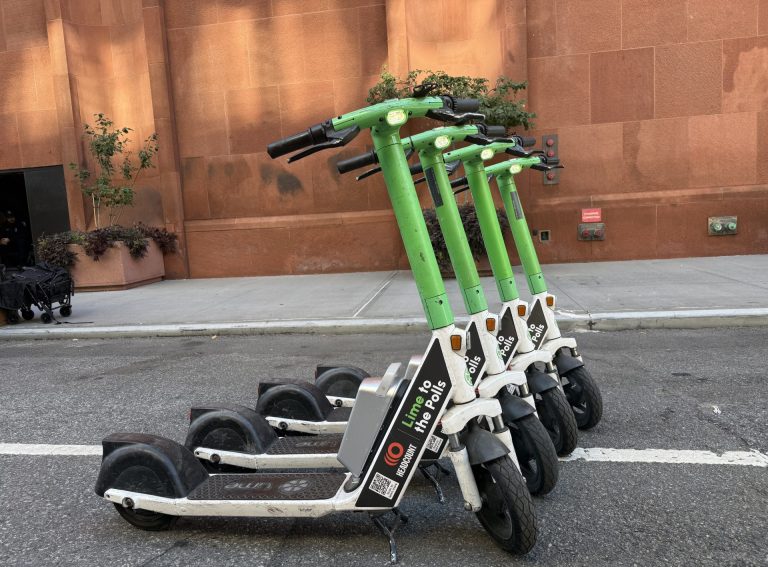
Parking is one of micromobility’s most defining issues today with operators having faced extensive criticism over shared bikes that block pavements and pose significant accessibility risks.
“Dockless e-bikes are heavy, fast, silent and unpredictable,” said Mike Wordingham, Head of Policy at the Royal National Institute of Blind People. “An astonishing 92% of blind and partially sighted people tell us they have had to walk into the road due to street obstacles such as e-bikes. We are glad the government is recognising this issue and putting forward plans to tackle it.”
To tackle antisocial behaviour like drunk riding or jumping red lights, the government proposes that local authorities also require a formal plan as a condition of license, with possible fines imposed for antisocial and illegal use. Again, it would be up to local authorities to determine this plan.
Fleet sizes are also addressed to prevent overcrowding of pavements – another issue that has garnered negative attention in recent years, particularly across London. Under the current proposals, licenses would be required to include specified fleet sizes across the licensing area, with the expectation that fleet caps would adjust depending on dynamic factors like seasonal demand or if an operator is not managing a larger fleet well.
Zag recently sat down with Caroline Seton, Co-Founder of London-based e-bike operator Forest, to explore what fleet caps would work best for the UK capital which is to see licensing powers devolved to Transport for London. She calls for a citywide framework with “reasonable” fleet caps at a level which “doesn’t undermine” the Mayor’s active travel ambitions.
“Legislation mustn’t hold back the growth of shared bikes by pulling fleet caps back,” Seton told Zag Daily. “What we consistently find is that when bike density in an area increases, trips per bike per day increase too.
“The more bikes there are, the more integrated they become in people’s commuting habits and the more reliable the service is. A significant step back in fleet caps, whether per operator or overall, would limit the scheme’s growth and set us back.”
For fleet management, the proposals call for a plan that would allow the dynamic deployment of vehicles within licensing requirements, for instance to include minimum service levels in rural areas with fewer transport links.
The government has also signalled possible moves around insurance as it seeks views on whether requirements should be included in shared bike licensing and, if so, what they should look like. While all operators are understood to currently have public and product liability insurance, the government is exploring other requirements for operators which could enable people to claim compensation if they’re hit by someone on a shared bike.
Further powers explored for local authorities include requirements around data-sharing and letting councils decide on the fee structure. Under the current proposal, the government said it has “no intention” of setting restrictions on the overall level of revenue local leaders can seek from shared cycle schemes.
National consistency vs local leadership
The consultation follows the English Devolution Bill passed earlier this year, which announced that local authorities would receive fresh powers to license rental e-bike operators and set requirements around parking, safety and accessibility standards.
Those requirements will fall within the remit of the national essential standards currently being developed by the government. According to the Department for Transport, these essential standards will set a “floor rather than a ceiling”, meaning local authorities will still have discretion in their individual licensing requirements and how far they go beyond the government standards.
What this will mean in practice is still to be seen, as the government attempts to balance national standards in the name of consistency and local licensing in the name of flexibility and know-how. The consultation, open until 31 December 2026, will hear from local authorities, operators and other stakeholders to establish the minimum standards.
“The current patchwork approach is confusing for riders, councils and operators, all of whom deserve greater clarity and certainty,” Lime CEO Wayne Ting said, stating that the consultation is an “important step forward”.
Shared operators Bolt and Voi also welcome the move towards consistent regulation.
Georgia Heathman, Bolt’s Public Policy Manager for the UK and Ireland, said 98% of Bolt rides end with a correctly parked bike which “shows what clear rules and effective management can achieve”.
“We want to see that standard applied consistently across the country.”
Christina Moe Gjerde, Voi’s VP for Northern Europe, said “consistent national standards, backed by local licensing will let responsible operators work with councils to keep pavements clear.”
Zooming in on London, Forest CEO Agustin Guilisasti highlighted the opportunity for clear regulation to cement the UK capital’s name as a cycling city, where 350,000 shared e-bike trips are taken everyday.
“To achieve this, we need national standards and a coherent, well-regulated, London-wide system – better for riders and, importantly, better for pedestrians and the city.”