Uber and Wayve have begun carrying passengers in autonomous vehicles in London with supervisors on board, making their service the first commercial autonomous ride-hailing operation to launch in the UK.
The service is available from today to customers booking UberX, Uber Electric and Uber Comfort vehicles. Passengers matched with one of Wayve’s vehicles can accept the autonomous car or switch to a conventional ride before it arrives with no additional charge.
The launch comes less than a month after Transport for London (TfL) licensed 15 modified Ford Mustang Mach-Es equipped with Wayve’s autonomous driving technology as private hire vehicles. It’s this approval that lets Uber and Wayve launch the passenger-carrying service in London today as long as a TfL-licensed private hire vehicle (PHV) driver remains in the vehicle.
“A key requirement of any PHV journey is for a licensed PHV driver to be present in the vehicle and that they are responsible for the vehicle at all times,” a TfL spokesperson told Zag Daily in a recent interview on the PHV approval process
That requirement remains in place. The vehicles’ autonomous driving system controls the vehicle during trips while the safety driver supervises the journey and can intervene when needed.
“We’re proud to introduce the Wayve AI Driver to the public for the first time right here in London,” said Alex Kendall, Chief Executive and co-founder of Wayve. He described London as “one of the most complex driving environments in the world”.
The service is initially limited to a small number of vehicles and excludes airports. More than 140,000 London Uber users have opted in to receive autonomous rides, according to the companies.
Passengers will use the existing Uber app to unlock the vehicle and start their trip. An in-car screen will show the planned route and provide information about the journey in 64 languages.
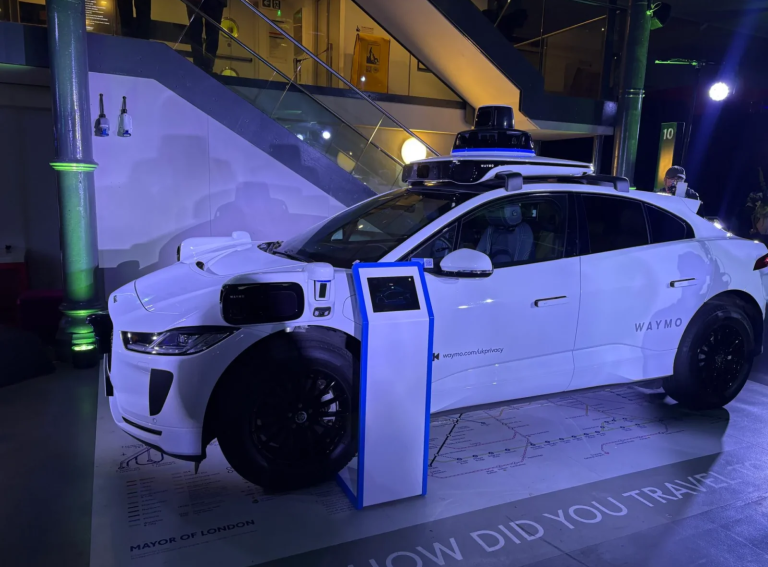
The launch gives Uber and Wayve an early position in London’s increasingly competitive autonomous vehicle market. Alphabet-owned Waymo is already testing around 100 vehicles in the capital, while Chinese technology company Baidu has also begun testing its Apollo Go robotaxis and plans to offer public rides in 2027.
How the first rides avoid the new approval system
Wayve and Uber’s current service operates under London’s existing private hire rules. Removing the safety driver requires approval under the new Automated Passenger Services (APS) framework created by the Automated Vehicles Act 2024.
The APS process involves national approval through the Driver and Vehicle Standards Agency (DVSA), with TfL consent also required for operations in London. The scheme is separate from the private hire licensing framework used for the Wayve launch.
No operator has yet completed the first stage of the APS approval process in London. Fully driverless services are therefore unlikely to begin this year, despite the government’s earlier ambition to have small-scale commercial trials operating in 2026.
The distinction leaves London with two parallel routes into autonomous passenger services. Uber and Wayve can now carry passengers with a licensed driver supervising the vehicle, while companies seeking to remove that driver must navigate the new national approval process.
Wayve said the supervised launch is the first step towards a larger deployment. The company plans to introduce Nissan Leaf vehicles using its autonomous driving system as it moves towards fully driverless operations, subject to safety validation and regulatory approval.