Baidu’s Apollo Go unit has started testing robotaxis in the London borough of Brent with human safety operators behind the wheel.
The vehicles – Baidu’s sixth-generation RT6 robotaxis – will be offered through Freenow by Lyft, the Hamburg-based taxi and multi-mobility app that Lyft bought last year for roughly $197 million. Public rides are not expected until 2027 and that target depends on sign-off from British regulators.
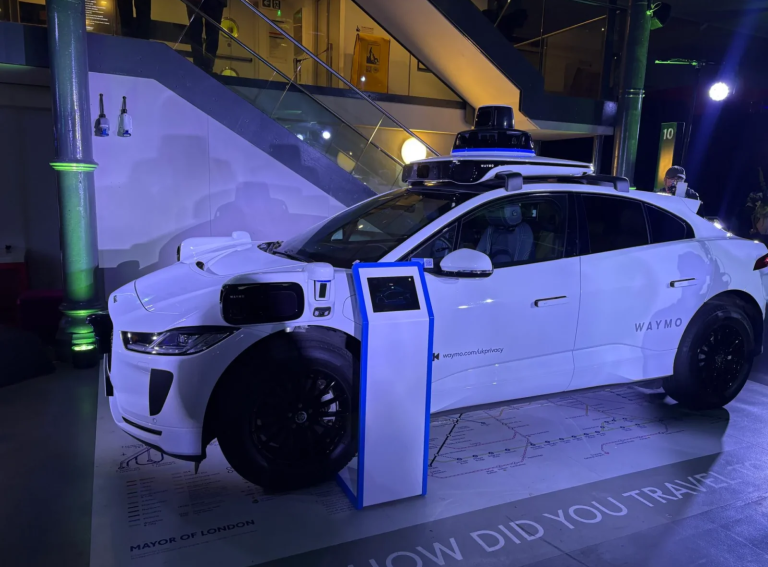
The trial adds Baidu to a growing list of companies testing autonomous ride-hailing in London. Alphabet’s Waymo began running safety-driver testing there in April. Uber has separately teamed up with British self-driving developer Wayve, with customers already able to join a waitlist for that service ahead of a planned launch this year with safety drivers, before fully driverless trips follow later.
Thomas Zimmermann, Chief Executive of Freenow by Lyft, framed the Baidu rollout as complementary to the drivers already on the platform.
“Human drivers continue to provide millions of rides on the platform and are a necessary part of the rideshare network experience,” Zimmermann told Zag Daily. “Once AVs reach scale, we envision rideshare as a combination of human drivers and autonomous vehicles to effectively address the natural ebb and flow of demand.”
Asked what Apollo Go adds to a city that already has several autonomous vehicle developers on its streets, Zimmermann pointed to the RT6’s track record, stating that it brings “a proven, globally scaled L4 system with hundreds of millions of kilometres of driverless experience” built specifically for ride-hailing rather than adapted from a passenger car. L4, or Level 4 autonomy, refers to vehicles capable of driving themselves without human intervention within a defined operating area.
Lyft conducted a survey to make its case for public appetite. Research commissioned by Freenow by Lyft found 58% of Londoners said they would be likely to ride in an autonomous vehicle, even though roughly half had never done so.
The regulatory path remains the bigger constraint. Freenow and Lyft say they are in discussions with Transport for London and the Centre for Connected and Autonomous Vehicles, the government body overseeing self-driving trials, which opened applications in May for companies wanting to test autonomous vehicles under official supervision.
Britain’s wider legal framework for driverless operation is still being finalised, meaning the 2027 timeline given by Baidu and Freenow, like those offered by Waymo and Uber, is a target rather than a certainty.